

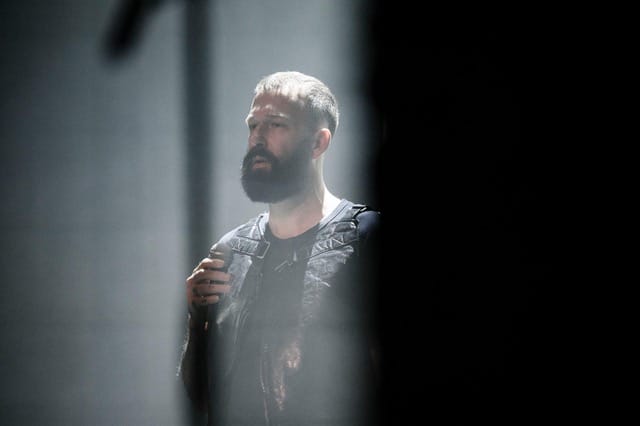
Quiet Husband, the project of artist and musician Richie Culver, occupies a unique space where techno, painting, and performance converge. His latest work, The Architecture of Perception, explores how our attention shifts when we engage deeply with a medium. For Culver, the act of producing music in a club environment is not unlike the process of painting in a studio; both rely on layering, texture, and contrast to build an immersive experience.
In an era where generative tools, AI, and MIDI generators are increasingly accessible, the question of what constitutes an artist’s voice has become more pressing. Culver argues that while these technologies offer convenience, they risk bypassing the essential, slower process of artistic development. For him, the true value of an artist’s practice lies not in the final output, but in the cultivation of sensibility—the ability to discern what to include, what to reject, and how to shape a personal language through deliberate, hands-on choices.
The Role of Judgment in Modern Production
As production tools become faster and more sophisticated, the line between technical execution and artistic expression blurs. Culver emphasizes that a record can be technically flawless and yet feel entirely anonymous. The differentiator, he suggests, is judgment. True artistry is found in the specific, subjective decisions an artist makes, ensuring that the work reflects a distinct point of view rather than the capabilities of the software used to assemble it.
Convenience becomes a hindrance when it begins to make creative decisions on the artist’s behalf. While speed is often touted as a benefit, Culver warns that if the most critical choices are outsourced to algorithms, the work begins to reflect the tool more than the creator. This shift, while becoming the new normal, challenges the very foundation of what makes music feel authentic.
Preserving the Human Element
Despite these concerns, Culver does not advocate for a total rejection of technology. Instead, he encourages artists to remain open to new tools while protecting the hands-on aspects of their craft. Processes such as listening, arranging, editing, and collaborating are the crucibles in which an artist’s instincts are forged. These instincts are not developed through shortcuts; they are the result of years of experimentation and the willingness to wrestle with the creative process.
Ultimately, technology is most effective when it supports an artist’s vision rather than dictating it. By maintaining a hands-on approach, artists can ensure that their work remains a genuine expression of their unique perspective, preserving the human judgment that no machine can truly replicate.