

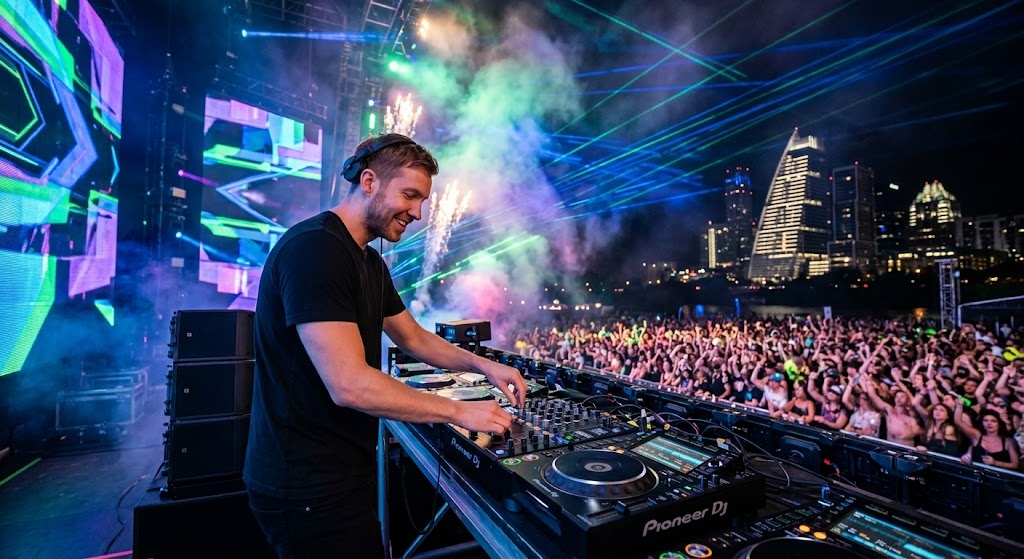
The relationship between electronic dance music and high fashion has evolved from a subcultural afterthought into a primary pillar of the industry. In 2026, the boundary between the DJ booth and the runway has effectively dissolved. EDM artists are no longer just performers; they are tastemakers who influence global streetwear trends, collaborate with luxury fashion houses, and curate visual identities that define the aesthetic of the festival experience.
The Power of Iconic Visual Identities
Modern EDM fashion is built on the foundation of the signature look. Artists like Marshmello have mastered the art of minimalism, utilizing a high-concept, custom-engineered helmet as the focal point of their brand. By pairing this complex accessory with a stark, monochromatic white outfit, the artist creates a visual canvas that is both instantly recognizable and highly replicable for fans. This strategy proves that when an accessory is sufficiently bold, the clothing itself can serve as a functional, understated backdrop.
Similarly, REZZ has established a distinct “Space Mom” aesthetic that leans into the darker, more industrial side of bass music. Her reliance on custom LED eyewear and dark, cyberpunk-inspired layers has created a template for fans to follow. By launching her own branded versions of these iconic accessories, she has successfully bridged the gap between underground rave culture and mass-market merchandise, proving that a cohesive visual identity is a powerful tool for fan engagement.
Luxury Streetwear and the Crossover Effect
Perhaps no artist has navigated the intersection of high fashion and electronic music as effectively as Peggy Gou. With a background in fashion design, Gou seamlessly blends Berlin underground sensibilities with luxury pieces from houses like Schiaparelli, Bottega Veneta, and Vivienne Westwood. Her approach to styling—mixing vibrant, high-end designer accessories with accessible streetwear—has set a new standard for how artists present themselves on the global stage.
This professionalization of artist fashion is mirrored by the rise of techno minimalism, championed by artists like Charlotte de Witte. Her preference for sleek, androgynous, all-black ensembles has become the unofficial uniform of the techno underground. By prioritizing functional, high-quality fabrics and tailored silhouettes, she demonstrates that power and femininity can be projected through restraint rather than excess.
Defining Trends for 2026
As we move deeper into 2026, several key trends are shaping the festival landscape. The Y2K cybercore revival is in full swing, bringing back low-rise silhouettes, mesh fabrics, and maximalist color palettes, all updated with modern production techniques. Simultaneously, the industry is seeing a significant shift toward gender-neutral fashion. The rise of the male crop top and the normalization of unisex silhouettes across all genders reflect a broader cultural movement toward freedom of expression in the festival space.
Technology also continues to play a central role. Holographic and metallic fabrics are no longer reserved for special occasions; they are now standard festival wear, designed specifically to react to the intense lighting environments of modern stage productions. Furthermore, the integration of sustainable materials into rave wear—such as recycled mesh and plant-based dyes—shows that the modern festival-goer is increasingly demanding both visual spectacle and environmental responsibility.
The Future of Festival Style
The current state of EDM fashion is characterized by the democratization of style. The tools to build a unique visual identity—from LED-integrated accessories to high-quality streetwear—are more accessible than ever. As artists continue to collaborate with major fashion brands and push the boundaries of what is considered “stage-appropriate,” the festival crowd will continue to absorb and amplify these trends. Ultimately, the evolution of festival fashion is a testament to the growing influence of electronic music on the broader cultural zeitgeist, proving that in 2026, the outfit is just as much a part of the performance as the music itself.