

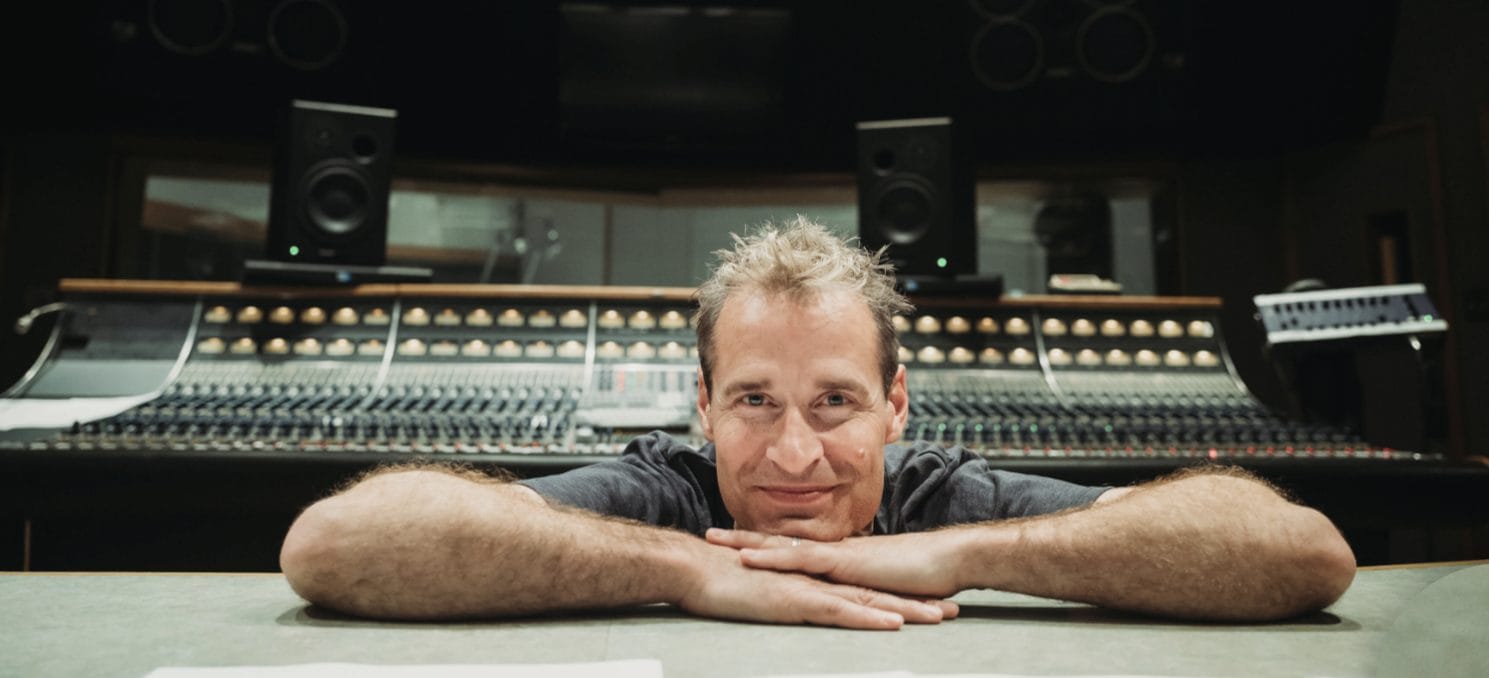
Paul Leonard-Morgan has spent much of his career moving between orchestra, electronics, film, television, games, and concert music, so the score for Watson fits neatly into the way he already thinks about composition. Released through Lakeshore Records, the Watson: Seasons 1 & 2 soundtrack follows a modern version of Dr. John Watson as he returns to medicine after Sherlock Holmes’s death, treating rare conditions while his old connection to Moriarty continues to pull him back toward investigation.
That mix of medical drama and mystery gives Leonard-Morgan plenty of space to work with tension, momentum, and character without leaning on one fixed genre. Across 28 tracks, the score moves through pursuit, discovery, danger, and loss, while keeping the music close to the series’ investigative structure. His wider background helps here as well. Alongside screen work including Dredd, Limitless, Cyberpunk 2077, and several collaborations with Philip Glass, Leonard-Morgan has also worked with artists such as Mogwai, Belle and Sebastian, and Snow Patrol.
The Role of Technology in Modern Music Production
The discussion we had with him moves away from the score itself and into a broader question about artificial intelligence and modern music production: what happens when tools make polished results easier and faster to achieve? Leonard-Morgan is less concerned with AI replacing composers than he is with artists confusing speed with substance. His answers keep returning to melody, taste, and the patience required to reject an idea that sounds finished before it is actually saying anything.
When asked how the pressure around speed and output has changed, Leonard-Morgan notes that for film music, the landscape remains distinct. “I do not think AI has affected speed and output for artists, particularly with regard to film music. We are contractually forbidden by the studios from using samples or anything created by AI,” he explains. While he looks forward to the day when technology can handle mundane tasks like splicing or beat manipulation, he warns against using it to generate original creative content.
Prioritizing Substance Over Speed
When ideas can sound polished so easily, Leonard-Morgan emphasizes the importance of the substance of a track. “Melodies and hooks get lost in the process when everything sounds so good straight out of the box. People start focusing on production values immediately instead of the core of the track,” he says. For him, the studio is a space for creative vision, not just technical execution.
Ultimately, he believes that protecting one’s taste is paramount. “You have to look after your taste first, though that comes from having patience. Putting down the first idea, producing it, and sending it off is very easy to do, though that does not mean it is going to be your best idea. You need the patience to try things and the courage to throw them away.”
To stay grounded in a fast-paced industry, Leonard-Morgan advocates for intentionality. “You need to breathe, listen to the music, feel the atmosphere, and become absorbed in it. I have a rule that when we are in the creative process, all phones are off and there are no clocks on the wall.”