

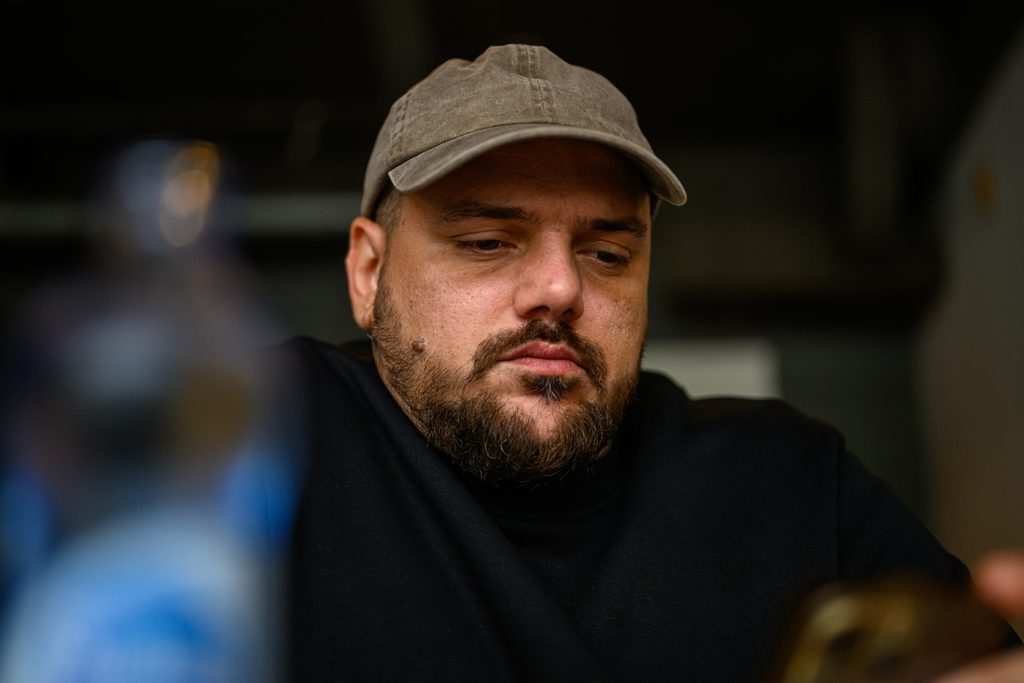
Nihil Young’s latest album, Compass, is built around the kind of personal material that artificial intelligence cannot fake with any real conviction. Released on August 14 via Zerothree, the debut album draws from the most intimate chapters of his life: the day he met his wife, the birth of his daughter, the death of his father, and the private emotional terrain that transforms a collection of tracks into a cohesive body of work. While the album features collaborations with artists like Rowland Giles, Leo Wood, and others, the emotional center remains firmly rooted in Nihil’s own lived experience.
This context provides a necessary counter-narrative to the current industry obsession with artificial intelligence. For Nihil, the conversation is not about novelty or productivity; it is about the psychological pressure placed on producers who constantly compare themselves to others online. He argues that the danger lies in conflating technical polish with artistic purpose, particularly during the fragile early stages of a song’s development.
Protecting the Creative Process
When asked how artists should treat their vulnerable, rough ideas in an era where polished AI output is just a click away, Nihil is emphatic: “Protect that roughness like it’s sacred.” He notes that the initial sketches for Compass were often messy and barely held together, yet that was where the true material lived. “AI can spit out something shiny in seconds, but it can’t give you the feeling that made you start the track in the first place,” he explains. “If you clean it up too early, you kill the thing that made it worth making.”
The Illusion of Polish
A recurring theme in the discussion is the distinction between a professional mix and a meaningful musical statement. Nihil challenges producers to ask themselves a difficult question: if you strip away the expensive plugins and the AI-assisted shortcuts, is there still something left that feels true? “The danger is falling in love with the surface and forgetting to ask whether the track actually needed to exist,” he says. For him, patience is not just a romantic notion; it is a practical necessity. The work that truly matters often feels incomplete for longer than is comfortable, and that discomfort is a vital part of the creative journey.
Individuation and Artistry
Ultimately, Nihil views the creative process through the lens of Jungian individuation—the long, often painful work of becoming who you actually are. He believes that while AI can imitate sound and structure, it cannot touch the private mythology every person carries. “Compass exists because of things no model has ever lived,” Nihil reflects. “Those experiences do not sit in a dataset. They sit in the body, in the nervous system.”
By refusing to treat the rise of technology as a purely technical debate, Nihil Young offers a compelling argument for authorship. His work serves as a reminder that the most important part of music is the human element—the part that comes from living, losing, and loving—which remains the one thing no prompt can ever touch.