

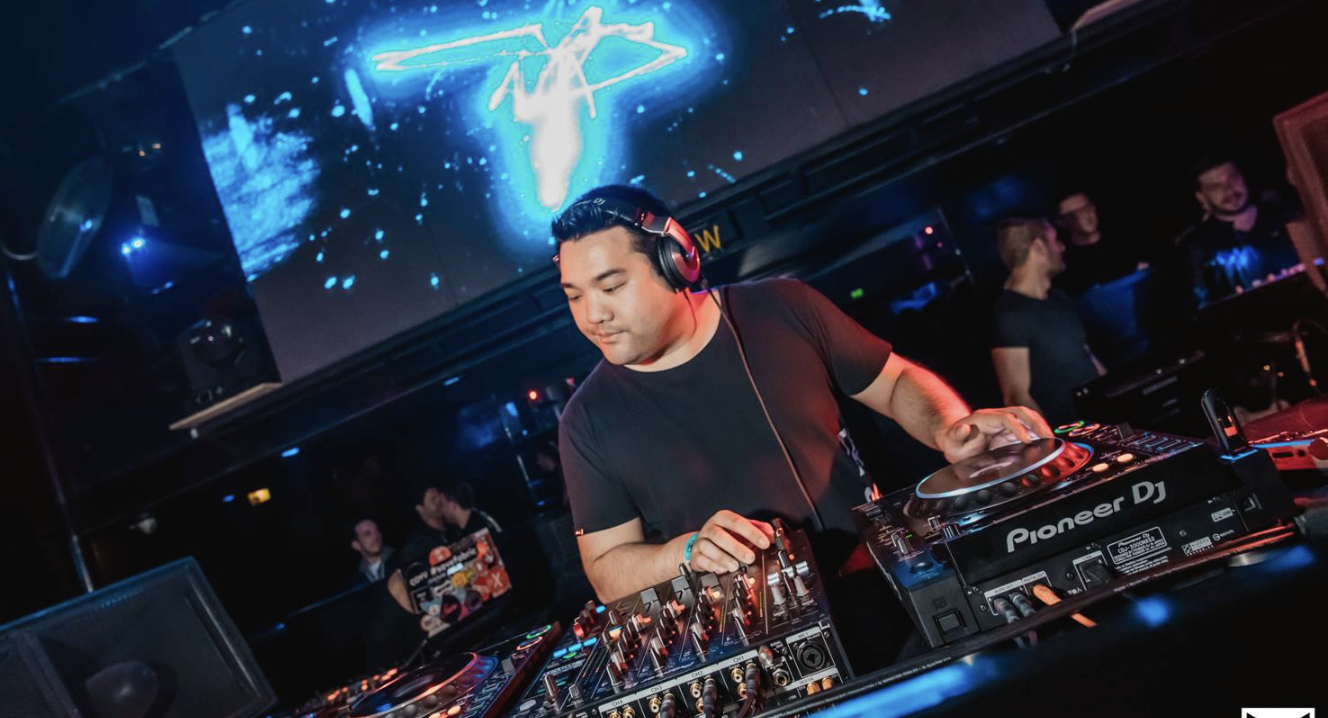
Electronic music has always rewarded artists who can be understood quickly, although that has become a stranger bargain now that every release has to compete with clips, visual language, market position, audience expectation, and the old-fashioned problem of whether the record actually hits. Darin Epsilon has lived with that tension longer than most, building Perspectives Digital across fifteen years while holding onto a melodic foundation that can move between progressive house, melodic techno, vocal records, and the kind of festival moments where a track either opens up or disappears.
That makes his latest release, “Ghost,” feel like a useful place to have this dialogue. The track marks a return to original vocal collaboration for the first time since 2015’s “My Own Time,” pairing him with acclaimed Italian vocalist Lacey on a summer-facing single built for the emotional end of the dancefloor. It arrives with a wealth of history, including appearances at Ultra Music Festival, Amsterdam Dance Event, and a long-running residency at Berlin’s Ritter Butzke.
The Trap of Genre and Identity
When asked if DJs today are expected to have a “thing”—a gimmick, look, or brand—Epsilon is pragmatic. “Not necessarily a marketing gimmick, but you do need a distinct angle or point of view in order to cut through,” he explains. “And yes, whether or not we like to admit it, DJs are brands. The music you release and the music you play in your sets all represent that brand. It needs to be clear, because promoters need to understand which scene you identify with in order to place you in the right rooms.”
However, this clarity can become a double-edged sword. Epsilon admits to feeling boxed in by how others market him. “I spent the first decade of my career pushing a certain sound, and that has come to define my legacy whether I like it or not,” he notes. He points out that being categorized by sound often leads to being categorized by audience, noting that progressive house tends to connect with older demographics, while melodic house and techno has become the entry point for Gen Z. These labels, he argues, quietly dictate which parts of the world take an artist seriously.
Consistency and Reinvention
For Epsilon, the key to avoiding predictability is focusing on musical fundamentals rather than chasing trends. “I grew up studying violin and piano, so I approach everything through melody, harmony, and structure,” he says. “Those principles don’t change even when production styles do.” He cites Solomun as a prime example of an artist who has successfully navigated genre-fluidity, keeping his work relevant across decades through constant evolution.
Reflecting on his own process, Epsilon emphasizes that identity isn’t something to be invented, but something to be uncovered. “The honest answer is that you don’t really discover your identity. You just stop borrowing someone else’s,” he says. He highlights the work of Anyma and Tale Of Us as a remarkable case study in expanding a brand without losing the original audience, noting that they successfully changed the game by evolving into a stadium-level act without appearing to sell out.
Ultimately, Epsilon believes that the most important thing for an artist is to maintain confidence in their own unique background. “The scene is far more global than it was when I started,” he concludes. “The difficulty is usually not in being unique. It’s in having the confidence to let what’s already there come through.”