

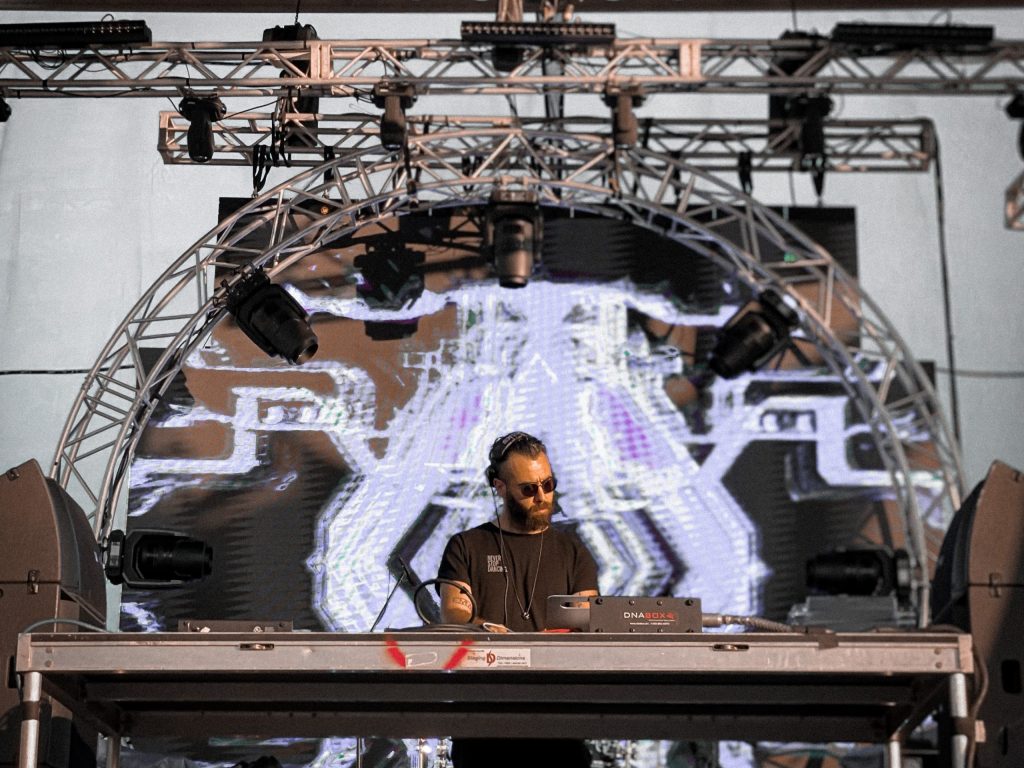
Bobi Stevkovski has reunited with YokoO for their latest EP, Stranger Things, released via the SATYA imprint. The record serves as a masterclass in patient, hypnotic electronic music, further refined by remixes from Sublee and Hostox. For Stevkovski, the release is a natural extension of a career built on deep, immersive soundscapes rather than fleeting trends.
Stevkovski’s journey in electronic music began in the early 2000s in Macedonia before he relocated to Atlanta. There, he became a central figure in the local scene, founding Project B. and helping to cultivate the city’s underground culture through residencies and events at venues like The Music Room, Studio No.7, and The Sound Table. This extensive background informs his philosophy: he views DJing not as a branding exercise, but as a craft rooted in the practical, often invisible work of building a night from the ground up.
The Shift from Performance to Presence
For many emerging DJs, the booth can feel like a place to prove one’s technical prowess. Stevkovski, however, argues that the most essential lesson is often the hardest to learn: the room rarely needs a display of ego. “The last thing a room needs from you is proof that you can mix,” he explains. “If that is the case, you are either not a DJ or you are in the wrong room. Technical ability should be a given.”
Instead, he emphasizes that the true role of a DJ is to act as a conduit for the room’s energy. By shifting focus away from the self and toward the collective experience of the audience, a DJ can move beyond mere performance. “Once you stop focusing on yourself and start focusing on the experience of the people in front of you, everything changes,” he notes.

This philosophy extends to his technical approach. While younger artists might be tempted to lean heavily on effects and complex layering, Stevkovski advocates for restraint. “Technique, timing, and harmony create moments unlike anything any FX would,” he says. “A great record played at the right time, mixed with intention and patience, will always have a bigger impact than a handful of effects.”
Context as the Ultimate Tool
When asked how he determines if a track can hold a room on its own, Stevkovski points to the importance of context. He suggests that a track’s “it” factor is rarely inherent; rather, it is defined by the moment it is played. “I have heard simple records completely captivate a dancefloor, and I have heard beautifully produced records fall flat because they were played at the wrong moment,” he observes. “The ‘it’ factor often comes down to context more than the track itself.”
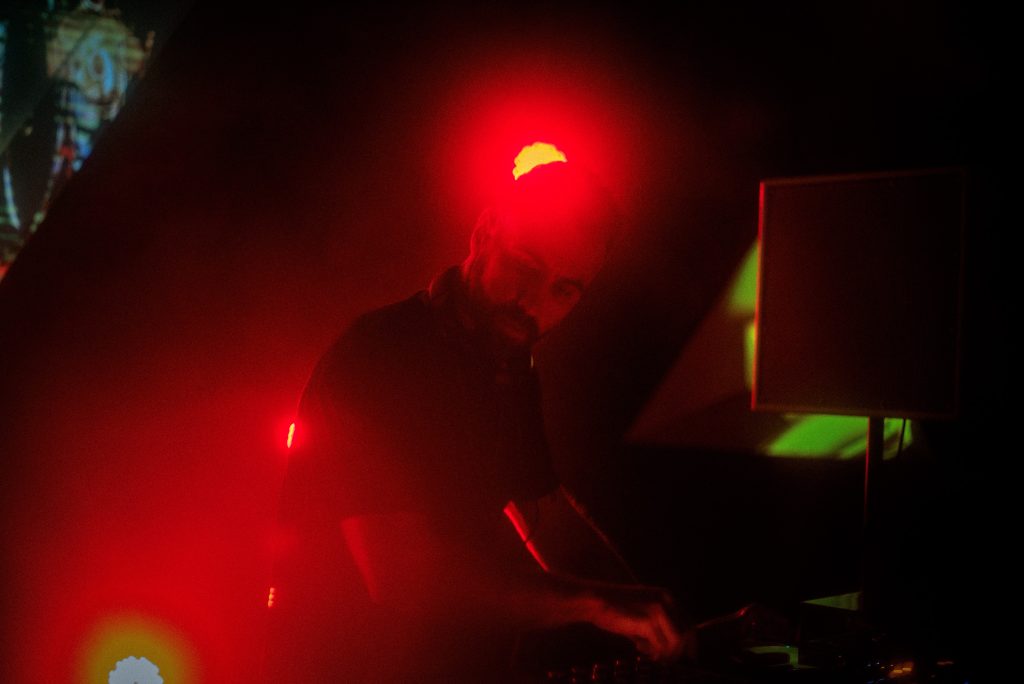
After nearly two decades behind the decks, his approach has become increasingly minimalist. He views his role as a storyteller, where the music serves as the protagonist. “When a record is doing exactly what it was meant to do, there is no reason to interfere with it,” he says. “My job is simply to place them in the right spot within the story. FX are not part of my playbook nowadays.”
The Power of Subtle Control
This evolution toward subtlety is perhaps the most significant change in his career. Where he once felt the need to constantly manipulate the sound, he now understands that the most powerful moments often come from what is left untouched. “Nowadays, I understand that less is often more,” Stevkovski concludes. “Small adjustments, proper timing, and patience usually have a much bigger impact than anything obvious. The crowd does not need to see what you are doing. They just need to feel the result of it. That is where subtle control becomes powerful.”