

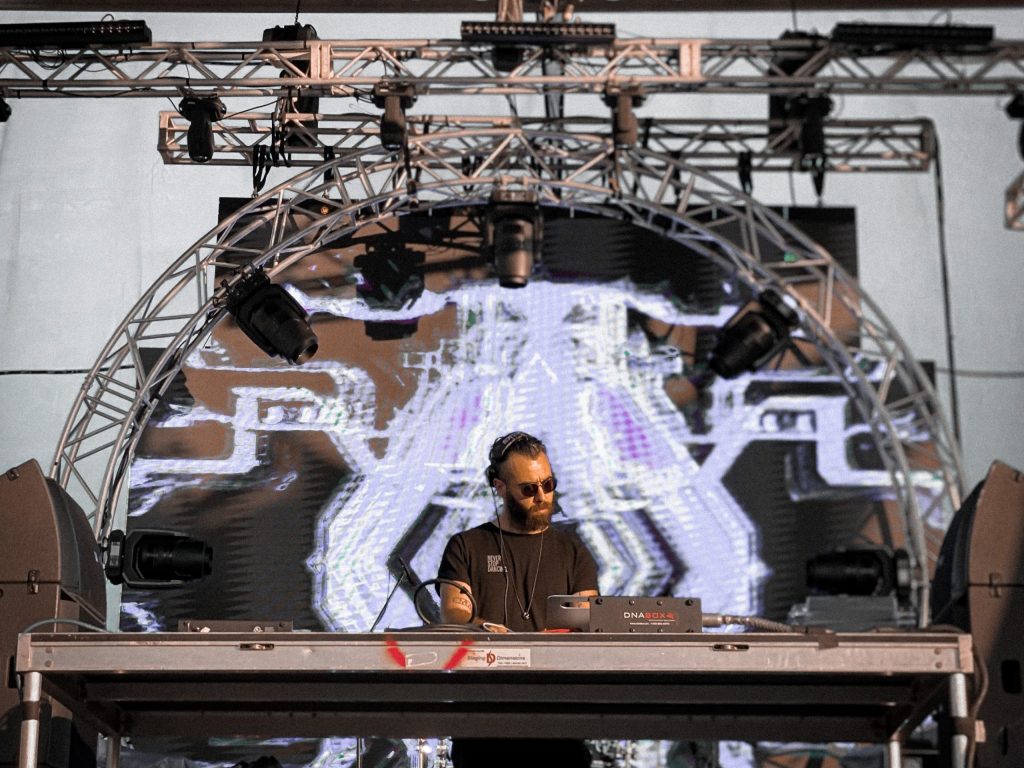
Bobi Stevkovski has returned to the spotlight with Stranger Things, his latest collaborative EP with YokoO on the SATYA label. The release serves as a masterclass in the patient, hypnotic soundscapes that have become the imprint’s signature. Featuring remixes from Sublee and Hostox, the project leans into the deeper, more nuanced corners of electronic music, offering a listening experience designed for the long haul rather than the quick, high-energy payoff.
Stevkovski’s journey is deeply rooted in the underground scene. Emerging from the Macedonian electronic music landscape in the early 2000s, he eventually relocated to Atlanta, where he became a pivotal figure in the city’s nightlife. Through his work with Project B. and the curation of events like ZEMYA, he helped shape the local culture at iconic venues such as The Music Room and The Sound Table. This extensive background informs his current philosophy: DJing is not about branding or ego, but about the practical, often invisible work of building a night from the ground up.
The Shift from Performance to Presence
For Stevkovski, the most vital lesson in his career has been the realization that a DJ’s technical prowess should never overshadow the music itself. “The last thing a room needs from you is proof that you can mix,” he explains. “If that is the case, you are either not a DJ or you are in the wrong room. Technical ability should be a given.”
He argues that the true essence of the craft lies in understanding the room’s energy and knowing exactly what the moment requires. When a DJ stops focusing on their own performance and starts prioritizing the audience’s experience, the entire dynamic of the set shifts. This philosophy extends to his use of technology; while modern gear offers endless possibilities for layering and effects, Stevkovski advocates for restraint. “Lay off the reverb and other effects,” he advises. “Focus on the storytelling part and the music you select to play. A great record played at the right time, mixed with intention and patience, will always have a bigger impact than a handful of effects.”
Defining the ‘It’ Factor
When asked how he determines if a track can hold a room without excessive manipulation, Stevkovski points to the importance of context. He notes that a track is either a tool or a narrative piece, and both have their place. “I have heard simple records completely captivate a dancefloor, and I have heard beautifully produced records fall flat because they were played at the wrong moment,” he says. “The ‘it’ factor often comes down to context more than the track itself.”
After nearly two decades behind the decks, his approach has evolved toward a minimalist aesthetic. He prefers to let the music breathe, trusting that proper selection and harmonic mixing will resonate more deeply with a crowd than constant, flashy adjustments. “When a record is doing exactly what it was meant to do, there is no reason to interfere with it,” he adds. “My job is simply to place them in the right spot within the story.”
Ultimately, Stevkovski views his role as a facilitator of a journey. By embracing patience and subtle control, he allows the music to remain the protagonist of the night. It is a disciplined approach, one that values the collective experience over the individual ego, ensuring that the dancefloor remains a space for connection rather than a stage for technical display.